
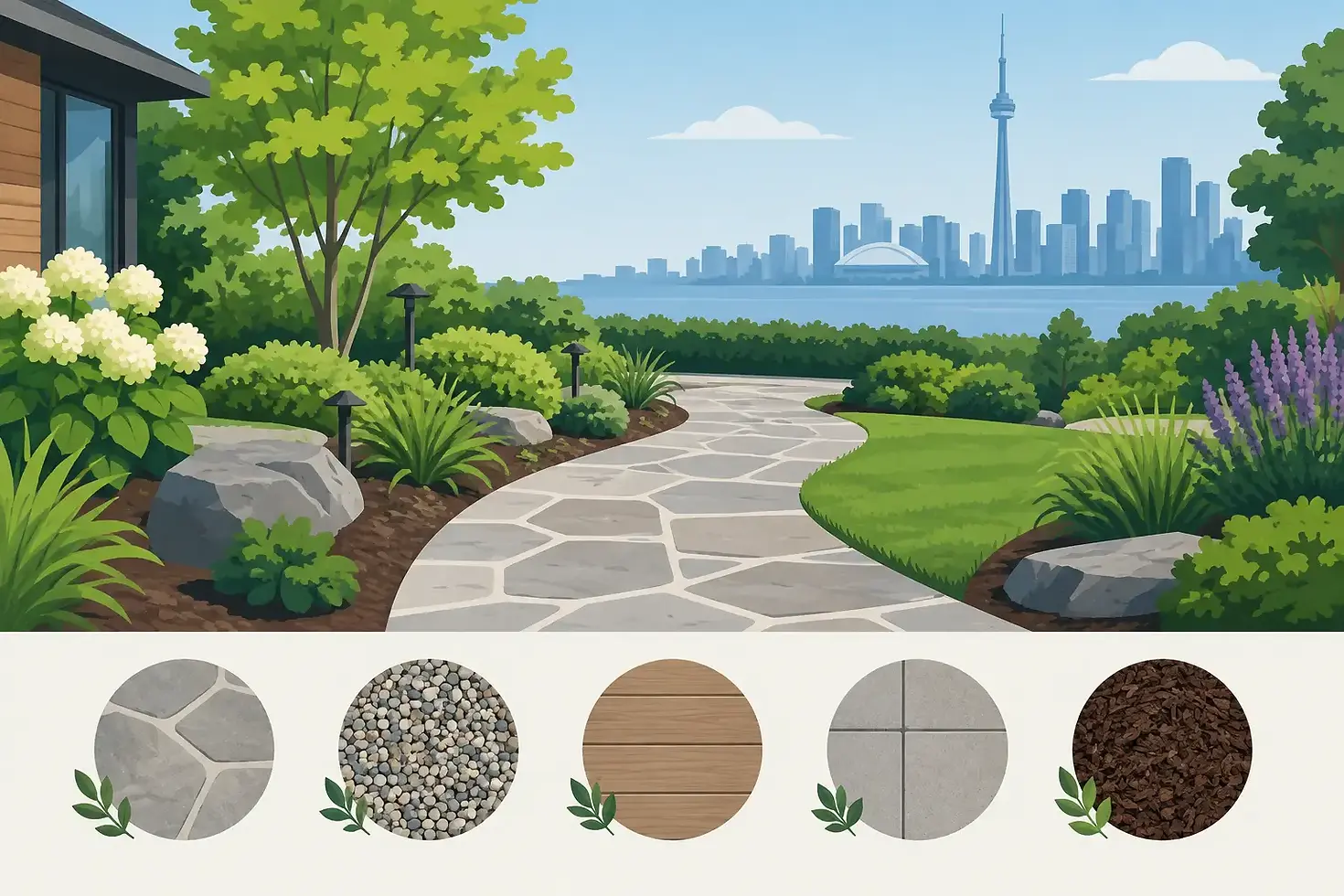
Best Materials for Garden Paths in the GTA
A garden path has a demanding job. It needs to guide people through the yard without becoming slippery after rain, uneven after winter, or muddy during spring thaw. For GTA homeowners, choosing the best materials for garden paths is not only about creating a polished look. It is a decision about drainage, maintenance, safety, and how well the landscape will hold up through repeated freeze-thaw cycles.
The right choice depends on where the path leads, how often it will be used, the style of your home, and the existing conditions below the surface. A narrow route through a planting bed calls for a different solution than a main walkway connecting a driveway, side entrance, and backyard patio.
What Makes a Garden Path Material Work Well?
Before selecting a colour or pattern, consider the role of the path. A lightly used stepping-stone route can be more informal and flexible. A path used every day for bins, children, guests, or garden equipment needs a stable, level surface with reliable edging and a properly prepared base.
Drainage is equally important. Water that sits beneath or beside a path can shift materials, wash away jointing material, and create frost heave in winter. A well-designed garden path should direct water away from the home while allowing the surrounding landscape to function as intended.
For properties in Etobicoke, Toronto, North York, and Mississauga, material selection should always be paired with site preparation. Even a premium paver or natural stone will underperform if the base is too shallow, poorly compacted, or unable to manage water.
Best Materials for Garden Paths: Top Options
Interlocking Pavers
Interlocking pavers are one of the most versatile choices for a finished, long-lasting garden path. They are available in a wide range of colours, sizes, and textures, making them easy to coordinate with a driveway, front walk, patio, or retaining wall. They can create anything from a clean contemporary path to a traditional cobblestone-inspired layout.
Their greatest advantage is repairability. If access is needed for drainage work, or if a section settles over time, individual pavers can be lifted and reset rather than replacing the entire path. With a properly compacted granular base, durable edge restraints, and well-finished joints, interlock provides a stable walking surface that is well suited to high-traffic areas.
The trade-off is that installation requires precision. A rushed base or weak edge restraint can lead to movement and spreading. For a main garden route or a path that connects key areas of the property, professional installation is usually worthwhile.
Natural Stone
Natural stone gives a garden path character that manufactured materials cannot fully replicate. Flagstone, limestone, and similar products offer tonal variation, natural texture, and a timeless appearance that suits mature gardens, traditional homes, and landscaped backyard retreats.
Stone can be installed with tightly fitted joints for a formal walkway or with wider joints planted with ground cover for a softer, more relaxed look. Larger pieces create a generous stepping surface and can make a narrow garden feel more intentional.
Not all stone performs the same way, however. Smooth surfaces can become slippery when wet, and irregular shapes take more labour to fit properly. Natural stone also benefits from thoughtful grading and a stable base, particularly where snow clearing or frequent foot traffic is expected. Choose a textured finish and a layout that avoids dramatic height changes between stones.
Concrete Pavers and Slabs
Large-format concrete slabs and pavers offer a crisp, architectural finish. They work particularly well in modern landscapes where straight lines, wide joints, and simplified planting schemes are part of the design. A slab path can visually connect the home to a patio, deck, or outdoor kitchen while making the yard feel larger and more organized.
Concrete pavers are generally more consistent in shape and thickness than natural stone, which helps create clean lines and predictable spacing. They can be installed in linear patterns, separated by gravel, or combined with turf and planting bands for a custom landscape design.
The main consideration is support. Larger units require a carefully prepared, level base to prevent rocking or cracking under movement. They are an excellent choice for a contemporary garden path, but the finished surface should be designed for the site rather than treated as a decorative layer placed over unstable ground.
Gravel and Crushed Stone
Gravel paths are an attractive option for informal gardens, side-yard routes, and areas where a permeable surface is beneficial. The sound underfoot, natural colour variation, and relaxed texture can make a landscape feel established without looking overly built.
Angular crushed stone is usually a better walking surface than round pea gravel because it locks together more effectively. Proper edging is essential to keep the material contained, while a compacted base and landscape fabric can help reduce migration and weed growth.
Gravel is not the best choice for every homeowner. It can shift underfoot, scatter onto lawns or patios, and make snow removal more difficult. It may also be less comfortable for strollers, mobility aids, or wheeled garden carts. In the right setting, though, it provides excellent drainage and a softer alternative to a fully paved path.
Brick
Brick paths bring warmth and traditional appeal, especially around older homes, cottage-style gardens, and heritage-inspired landscapes. Their smaller format allows for attractive patterns such as basketweave, running bond, and herringbone. A brick walkway can also complement red masonry on the home without appearing too matched.
For outdoor use, select bricks rated for paving rather than standard wall brick. The path needs a strong base, edge restraint, and joint material that can handle weather exposure. Reclaimed brick can create a beautiful aged look, but its condition should be assessed carefully before installation.
Brick requires more attention to detail than a simple stepping-stone path, yet the result can feel exceptionally welcoming. It is most effective when it connects to the overall architecture of the property rather than competing with it.
Wood and Composite Walkways
Wooden boardwalks and composite path systems are useful in specific conditions, particularly over damp ground, uneven terrain, or sensitive planted areas. They can create a defined route without extensive excavation and bring a warm, resort-like quality to a backyard.
This option is not typically the first choice for a front garden path or a high-traffic route exposed to snow and ice. Wood requires regular care, and any surface must provide adequate traction when wet. Composite can reduce maintenance, but it still needs a sound supporting structure and careful detailing around drainage.
Where a path crosses a low area or winds through a naturalized garden, a raised walkway can be both practical and visually distinctive.
Match the Material to How You Use the Path
A functional garden path starts with honest expectations. For a route used daily from the driveway to a side gate, interlocking pavers or concrete slabs offer the stability most homeowners want. For a quiet route through a perennial garden, natural stone or gravel may better suit the setting.
Think about seasonal use as well. If you plan to clear snow, choose a surface that can be shoveled without catching edges or displacing loose material. If the path is beside a downspout, sloped yard, or retaining wall, drainage planning should come before final material selection.
A path should also feel proportional. Oversized slabs can overwhelm a small side garden, while tiny stepping stones can look scattered and feel awkward along a main route. The width, border treatment, planting, and transition to patios or lawns all influence the finished result.
Installation Details That Protect Your Investment
The visible material is only part of the project. Reliable paths begin with excavation to the appropriate depth, a compacted granular base, correct slope, and durable edging where needed. These details help prevent settling, puddling, and shifting through changing seasons.
Jointing matters too. Depending on the material and layout, joints may use polymeric sand, gravel, mortar, or planted ground cover. Each option affects drainage, maintenance, and the final appearance. A formal paved path and a casual flagstone route should not be built the same way simply because both are walkways.
For larger landscape upgrades, it is often smart to plan the path alongside grading, garden beds, lighting, irrigation, drainage improvements, and retaining walls. This avoids having to lift finished surfaces later to complete work that could have been coordinated from the start.
Choose a Path You Will Enjoy Using
The best garden path does more than fill an empty strip of lawn. It makes the yard easier to move through, protects planting areas, and gives the landscape a sense of direction. Whether your vision calls for refined interlock, natural flagstone, or a relaxed gravel trail, the material should fit the way your household lives outdoors.
A free on-site assessment from Maximum Landscaping can help turn that vision into a durable plan, with recommendations based on your property’s layout, drainage needs, and long-term goals. The right path should feel natural from the first step and continue to perform beautifully long after the garden has grown in.


Comments