


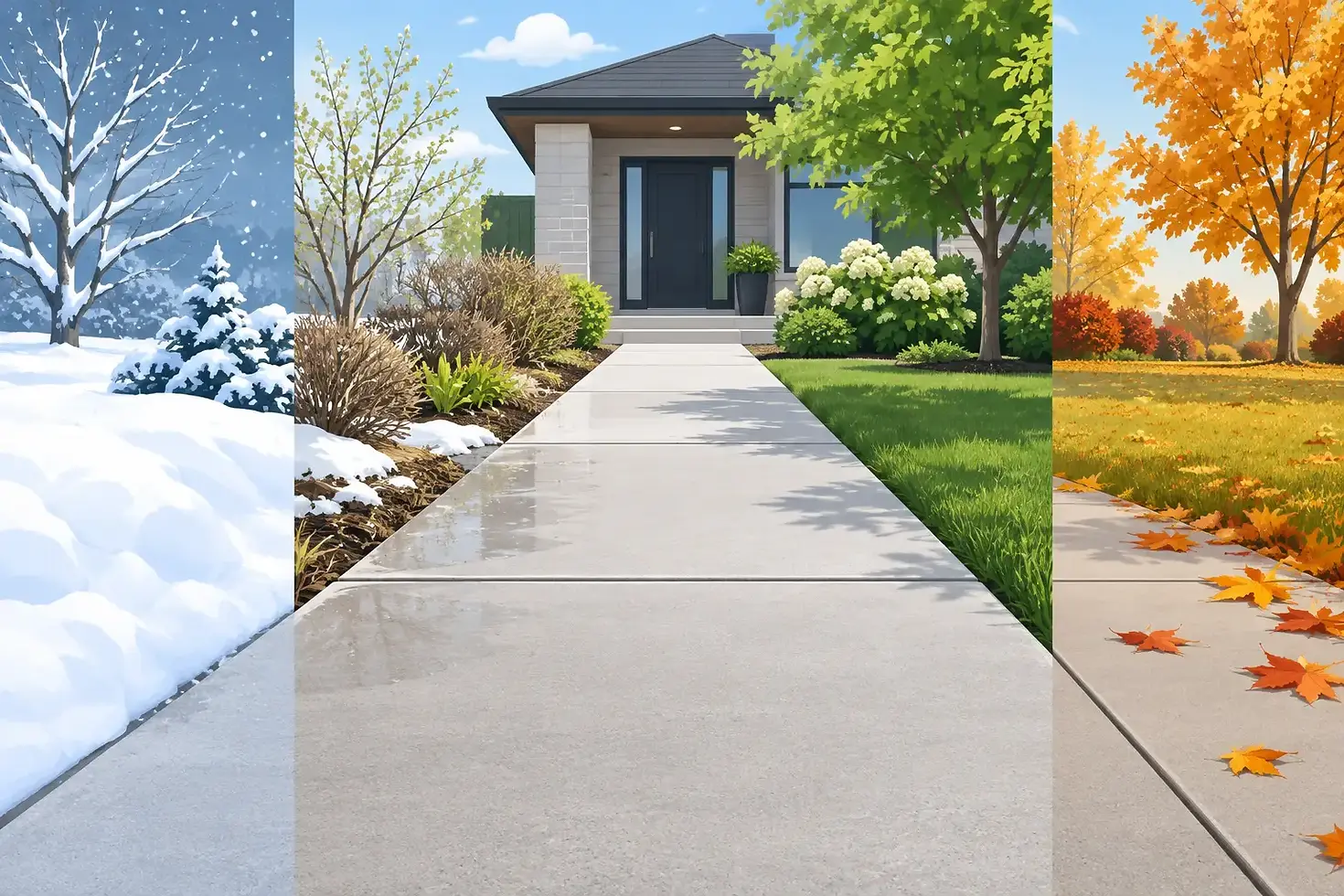
Are Concrete Walkways Durable in Ontario Weather?
A front walkway has a demanding job. It needs to welcome guests, stand up to daily foot traffic, shed water away from the home, and still look polished after a Toronto winter. So, are concrete walkways durable? Yes - when the walkway is properly designed and installed for local soil, drainage, and freeze-thaw conditions. When those details are overlooked, even quality concrete can crack, settle, or deteriorate sooner than a homeowner expects.
For homeowners planning an exterior upgrade, concrete can be a lasting, attractive investment. Its performance, however, depends far more on the work beneath and around the slab than on the surface you see on installation day.
What Makes a Concrete Walkway Durable?
Concrete is a strong material, but it is not indestructible. A residential walkway is a relatively thin slab exposed to seasonal movement, moisture, salt, snow clearing, and changing temperatures. Durability comes from giving that slab a stable foundation and room to respond to those conditions.
A well-built concrete walkway begins with excavation to the proper depth and a compacted granular base. The base supports the concrete evenly and helps water move away rather than collecting beneath it. If soil or base material is loose, waterlogged, or unevenly compacted, the slab can settle in sections. That movement often leads to cracking, trip hazards, and water flowing in the wrong direction.
Concrete itself also needs to be suited to exterior use. The right mix, correct placement, careful finishing, and appropriate curing time all contribute to a denser, more resilient surface. Rushing the process can weaken the finished walkway before it has even had a full season of use.
Why Ontario Winters Test Concrete Walkways
In Etobicoke, Toronto, North York, Mississauga, and across the GTA, winter is the biggest durability test. Water can enter small pores or hairline cracks in concrete. When it freezes, it expands. Repeated freezing and thawing can gradually widen cracks, loosen the surface, and create flaking known as spalling.
This does not mean concrete is a poor choice for our climate. It means the installation must account for the climate from the beginning. A walkway should slope gently away from the house so meltwater does not pool beside the foundation or remain on the slab. Proper grading and drainage are just as valuable to walkway performance as the concrete mix itself.
De-icing products can also affect the surface. Some salts are harsher on concrete than others, especially during the first winter after installation. Homeowners should follow their contractor's guidance on when a new walkway can be exposed to de-icers and choose concrete-friendly products where possible. Sand can improve traction without introducing additional chemicals to the surface.
Control Joints Are Planned Protection
Straight lines cut into concrete are not simply decorative. These are control joints, placed to encourage concrete to crack in predictable locations as it naturally shrinks and moves over time. Concrete will develop some degree of movement; proper joints help keep that movement orderly instead of allowing random, highly visible cracks to form across the walkway.
Joint layout should suit the walkway's width, length, shape, and connection points. A path that turns around a garden bed or meets a porch requires careful planning. This is one reason a custom site assessment matters. A standard approach may not address the drainage pattern, grade changes, or existing hardscape around your home.
How Long Can a Concrete Walkway Last?
A professionally installed and maintained concrete walkway can serve a home for decades. The exact lifespan depends on exposure, soil conditions, drainage, maintenance habits, and the quality of construction. A sheltered path with effective drainage may remain in excellent condition longer than a walkway exposed to heavy runoff, road salt, or frequent heaving from poor underlying soil.
Minor hairline cracking does not always mean a walkway is failing. Concrete can develop small cracks as it cures and responds to temperature changes. The more significant concerns are cracks that widen, separate vertically, hold water, or create an uneven walking surface. Those signs may point to base movement or drainage issues that should be addressed rather than simply covered over.
A durable walkway is therefore not just a matter of choosing concrete. It is a site-specific construction project that considers how water moves across the property, where snow is piled, how people use the entry, and how the walkway connects with steps, driveways, gardens, or a front porch.
Concrete Walkway Durability Compared With Other Options
Concrete offers a clean, tailored appearance and can be finished in several ways, from a simple broom finish for traction to decorative exposed aggregate or stamped patterns. It is a strong option for homeowners who want a continuous surface with minimal joints and a defined, contemporary look.
Interlocking stone is another excellent hardscape choice, particularly where future access to underground services or easier spot repairs may be a priority. Because interlock consists of individual units, a skilled contractor can lift and reset a localized area if settling occurs. Concrete does not offer the same repair flexibility, and colour matching on a patched section can be difficult as the original surface ages.
On the other hand, a concrete walkway does not have the many joints found in interlock, which some homeowners prefer for its more uniform appearance and simpler surface cleaning. Neither material is automatically better for every property. The best choice depends on the style of the home, the site conditions, the desired finish, and the level of long-term flexibility you want.
Installation Details That Protect Your Investment
The most durable concrete walkways are built with the full property in mind. Before construction begins, the area should be assessed for existing grading issues, downspout discharge, low spots, tree roots, and transitions to neighbouring surfaces. Water should never be treated as an afterthought. A beautiful new path can still become frustrating if roof runoff repeatedly washes across it or settles beside the foundation.
Thickness also matters. A pedestrian walkway does not require the same construction as a driveway, but it still needs a properly prepared base and a slab thickness suited to its intended use. If bins, equipment, or vehicles are likely to cross an area, that should be discussed during planning so the design can respond accordingly.
Edges deserve attention as well. Unsupported slab edges are more vulnerable to cracking and chipping, especially when adjacent soil washes away or lawn equipment repeatedly strikes the concrete. Clean transitions, proper grading, and thoughtfully planned landscaping help protect the walkway while creating a finished front-yard presentation.
At Maximum Landscaping Services, concrete work is approached as part of the larger outdoor environment, not as an isolated strip of pavement. Coordinating the walkway with drainage, garden edges, front steps, retaining walls, and planting creates a more functional result and helps protect the investment over the long term.
Simple Care for a Long-Lasting Walkway
Concrete is relatively low maintenance, but it benefits from consistent, sensible care. Keep leaves, soil, and standing water from collecting along the edges. Clean spills promptly, particularly automotive fluids or staining materials that can leave lasting marks. In winter, use a plastic shovel where practical to reduce the risk of scraping the surface or catching an edge.
Sealing may be recommended depending on the finish, exposure, and condition of the concrete. A suitable sealer can help limit moisture absorption and make the surface easier to clean, but it is not a substitute for proper drainage or structural preparation. If water is pooling or sections are moving, the underlying cause needs attention first.
Homeowners should also inspect the walkway each spring. Look for new cracks, flaking, low areas, or water that consistently drains toward the house. Early attention can often prevent a manageable issue from becoming a larger repair project.
A concrete walkway can provide decades of reliable service while giving your entry a crisp, finished look. The key is to begin with a design that respects your property's drainage, grade, and year-round conditions - then build it with the care that a long-term home improvement deserves.


Comments