

Outdoor Living Trends Shaping GTA Backyards
A backyard that only works for a few warm weekends is no longer enough. The most meaningful outdoor living trends are moving GTA homeowners toward spaces that feel connected to the home, handle changing weather, and make everyday life easier. That may mean a larger patio for family dinners, a private seating area beneath a pergola, planting that softens a hardscape, or drainage improvements that keep the yard usable after a heavy rain.
The strongest trend is not one specific material or feature. It is thoughtful planning. Homeowners are investing in outdoor areas with a clear purpose, durable construction, and a design that fits the way they actually use their property.
Outdoor Living Trends Start With Defined Zones
A lawn, patio, garden, and fence can coexist, but a well-designed backyard gives each area a job. Rather than placing a table wherever there is open space, homeowners are creating distinct zones for dining, lounging, cooking, children’s play, gardening, and quiet relaxation.
This approach makes a yard feel more spacious, even when the footprint is limited. A compact Toronto or Etobicoke backyard, for example, may benefit from a dining patio close to the house, a lower lounge area set slightly apart, and a planted edge that adds privacy without making the space feel enclosed.
Grade changes, retaining walls, interlocking stone, and carefully positioned planting can define these zones naturally. The goal is not to divide the yard into too many small features. It is to create an easy flow from one activity to the next.
Patios Are Becoming Outdoor Rooms
The patio remains the foundation of many backyard transformations, but its role has expanded. Homeowners are choosing patios large enough to accommodate real furniture, not just a small bistro set. Comfortable seating, dining tables, planters, and a fire feature all require room to breathe.
Interlocking stone and professionally finished concrete are popular choices because they provide a clean, durable surface and can be tailored to the home’s architectural style. The right choice depends on the desired look, maintenance expectations, drainage requirements, and how the space will be used. A contemporary home may suit large-format slabs and crisp lines, while a more traditional property may call for warmer tones and a more textured layout.
A premium patio is built from the base up. Proper excavation, grading, compaction, and edge restraint matter as much as the visible finish. In the GTA, freeze-thaw cycles can expose shortcuts quickly through shifting pavers, low spots, and pooling water.
Flexible Shade and Weather Protection
Canadians want to spend more time outside, but direct summer sun and sudden rain can shorten the life of an outdoor gathering. That is why pergolas, privacy screens, covered areas, and strategic tree planting continue to shape backyard design.
A pergola can establish a strong focal point over a dining or lounge area while giving homeowners a structure for adjustable shade, lighting, or climbing plants. It works especially well when it is integrated into the patio layout rather than added as an afterthought. For some homes, a solid roofed structure offers more weather protection. For others, partial shade preserves the open-air feeling they want.
Privacy is part of comfort, particularly in closely spaced neighbourhoods. Modern fencing, layered planting, hedging, and decorative screens can create separation without turning the backyard into a closed box. The best solution depends on sightlines, sun exposure, local conditions, and how much ongoing maintenance the homeowner wants to take on.
Outdoor Living Trends Favour Low-Maintenance Planting
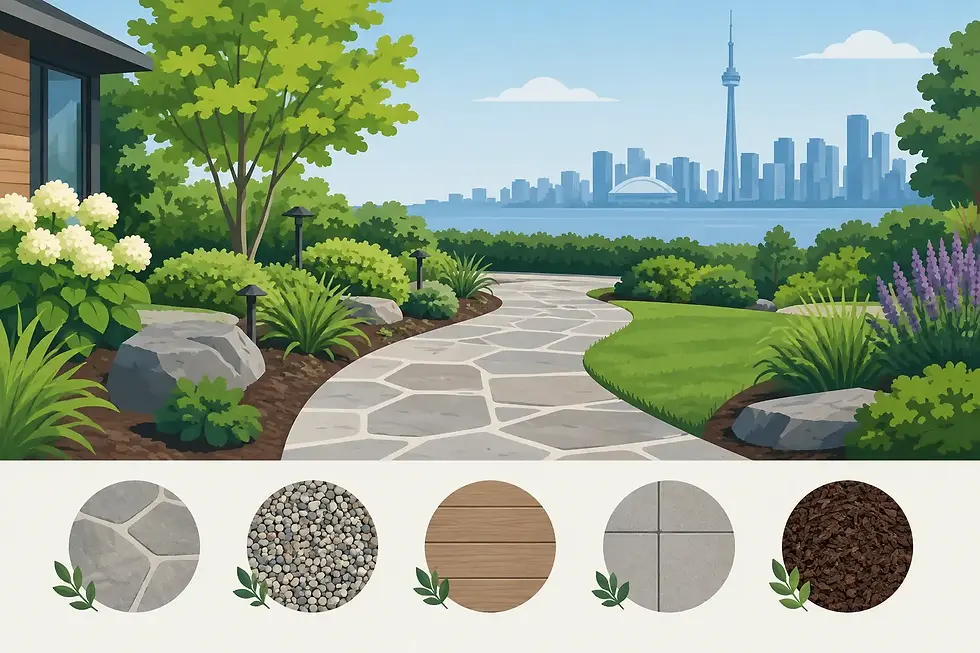
Homeowners still want greenery, but they are increasingly looking for gardens that look polished without demanding constant attention. This has led to more intentional planting plans built around hardy shrubs, perennials, ornamental grasses, mulch beds, and trees selected for the site.
A successful low-maintenance garden is not simply a smaller garden. It is one designed around the property’s soil, sun, drainage, and available space. A plant that thrives in a sunny, well-drained front yard may struggle beside a shaded fence or in a low area that stays wet after rainfall.
Layering is also becoming more common. Instead of lining the property with a single type of shrub, homeowners are combining different heights, textures, and seasonal interest. Evergreen structure can provide year-round definition, while flowering plants and grasses bring movement and colour through the warmer months.
Mulch has a practical role here as well. It gives planting beds a finished appearance while helping retain moisture, suppress weeds, and protect soil. Where natural grass is difficult to maintain, artificial turf can be a practical option for select areas such as side yards, pet zones, or small play spaces. It is not the right answer for every yard, but it can reduce maintenance where a natural lawn repeatedly struggles.
Drainage Is Becoming a Design Priority
Drainage is not the most visible backyard feature, but it is often one of the most valuable. More homeowners are recognizing that standing water, soft lawn areas, erosion, and damp areas near the foundation should be addressed before a new patio or garden is installed.
A beautiful hardscape cannot perform well if water has nowhere to go. Proper grading directs surface water away from the home and helps protect patios, walkways, garden beds, and lawn areas. Depending on the property, drainage work may include regrading, swales, catch basins, channel drains, or other site-specific solutions.
Addressing drainage early also protects the investment in everything that follows. It is far more efficient to plan water management alongside a new patio, retaining wall, or sod installation than to disturb a completed landscape later. During an on-site assessment, a contractor should look beyond the surface and consider downspout locations, existing slopes, soil conditions, and the way water moves across the property after a storm.
Front Yards Are Getting the Same Attention as Backyards
Outdoor living is not limited to the backyard. GTA homeowners are upgrading front yards to improve curb appeal, create safer access, and give the home a more finished presence from the street.
Interlocking driveways, defined walkways, retaining walls, refreshed sod, well-shaped planting beds, and properly pruned trees can dramatically change the first impression of a property. These upgrades can also solve practical problems. An uneven walkway, crumbling driveway edge, or poorly graded entrance affects both appearance and day-to-day use.
The most successful front-yard designs balance visual impact with restraint. Too many materials, sharp colour contrasts, or oversized features can compete with the home itself. A cohesive palette and clean transitions between driveway, walkway, planting, and entry usually create a more lasting result.
Build for Daily Use, Not Just the Reveal
The best outdoor spaces photograph beautifully because they work beautifully. Before choosing pavers, plants, or a pergola style, it helps to consider how the yard will function on an ordinary Tuesday evening. Will there be enough room to pull out dining chairs? Is the route from the kitchen to the patio convenient? Where will muddy shoes, garden tools, barbecue equipment, and children’s toys go?
Lighting deserves the same practical thinking. Subtle pathway lighting, step lighting, and illumination around key gathering areas can make the space safer and more inviting after sunset. It should support the layout, not overwhelm it.
Durability should guide every decision. In Southern Ontario, exterior materials need to handle snow, ice, rain, heat, and seasonal movement. This does not mean every backyard needs the same construction approach. It means the design, materials, base preparation, and drainage plan should be matched to the site.
A professionally planned outdoor renovation can turn an underused yard into an extension of the home while supporting curb appeal and long-term property value. For homeowners in Etobicoke and across the GTA, starting with a clear conversation about the property, priorities, and site conditions is the most reliable way to turn a trend into an outdoor space that remains useful for years to come.


Comments