

Mulch Installation Services Toronto Homeowners Trust
A fresh layer of mulch can make a garden look finished in a single afternoon, but its value goes far beyond appearance. Properly selected and installed mulch helps garden beds hold moisture, suppress weeds, protect plant roots, and create the crisp contrast that makes shrubs, perennials, trees, and stonework stand out. For homeowners looking for mulch installation services Toronto properties can depend on, the difference is in the preparation beneath the mulch and the attention to detail around every bed edge.
At Maximum Landscaping Services, mulch is treated as part of a complete landscape plan, not an afterthought. Whether your property needs a seasonal garden refresh or the finishing touch on a larger outdoor renovation, a professionally installed mulch bed supports a cleaner, healthier, more polished yard.
Why Mulch Is More Than a Decorative Finish
Toronto and the GTA experience hot summer periods, heavy rain, freeze-thaw cycles, and long stretches when garden soil can dry out quickly. Exposed soil is vulnerable to all of it. Rain can compact bare beds or wash soil away from slopes, while direct sun pulls moisture from the root zone and encourages weeds to take hold.
A correctly installed mulch layer acts as a protective cover. It reduces evaporation, helping soil retain more consistent moisture between waterings. It also helps moderate soil temperatures, which is especially useful around newly planted shrubs, young trees, and perennials that are still establishing their root systems.
The visual improvement matters too. Mulch creates a deliberate backdrop for planting beds, softens the transition between lawn and garden, and gives the entire property a maintained appearance. When it is installed at the right depth with clean edges, even an established garden can feel newly designed.
What Professional Mulch Installation Services in Toronto Include
Throwing mulch over existing weeds or compacted soil may create a quick colour change, but it rarely delivers lasting results. Professional mulch installation begins with evaluating the condition of the bed itself. That means looking at weeds, existing mulch, soil level, drainage patterns, plant health, and the condition of the surrounding edge.
Old mulch does not always need to be removed completely. If it is still breaking down naturally and the bed has not become too deep, it can often be refreshed and blended into the soil surface. However, mulch that has formed a dense, water-resistant mat, contains excessive debris, or has been piled on for years may need to be removed or redistributed before new material is added.
The bed is then weeded, cleaned, and shaped. Defined edging is especially important. It keeps mulch from spilling into the lawn, makes mowing easier, and gives the garden a sharper, more intentional outline. The new mulch is spread evenly around plantings without burying stems, crowns, or tree trunks.
This preparation is what separates a durable landscape finish from a temporary surface cover.
The Right Depth Protects Plants
More mulch is not always better. A layer that is too thin may not provide enough weed suppression or moisture retention. A layer that is too thick can reduce air movement into the soil, hold excess moisture around stems, and create ideal conditions for pests or decay.
For most residential planting beds, a depth of roughly 5 to 8 centimetres is effective. The ideal depth can vary depending on the mulch type, soil conditions, drainage, and the plants already in the bed. Near tree trunks and woody shrub stems, mulch should be pulled back rather than built into a mound. The goal is to protect the root area while allowing the base of the plant to breathe.
Choosing a Mulch That Suits Your Property
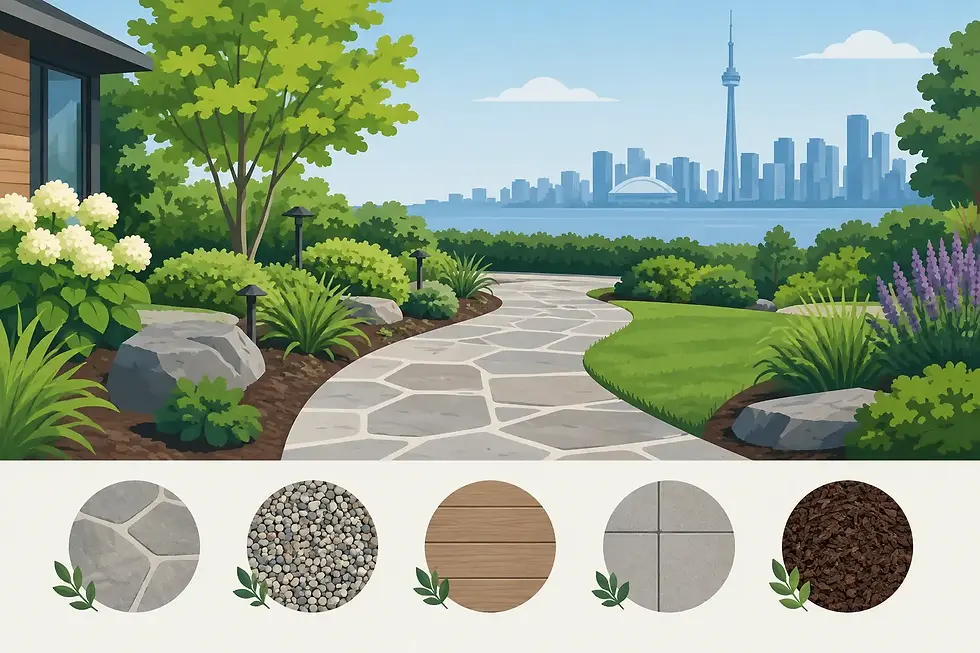
The best mulch is not simply the colour that looks good on installation day. It should complement your home, suit the planting design, and work with the amount of maintenance you want from the space.
Natural shredded bark and wood mulch are popular choices for Toronto gardens because they provide an organic, classic finish and gradually break down to contribute organic matter to the soil. Dark brown mulch can create a rich, understated look around greenery, while black mulch offers stronger contrast for light-coloured homes, stone borders, and flowering plants. Red-toned mulch can work well in select designs, though it is generally best used where it complements the home’s brick, siding, or existing hardscape.
Cedar mulch is often selected for its natural appearance and pleasant scent. It can be an attractive option in ornamental beds, although the best choice still depends on the plants, exposure, and overall design. Decorative stone is sometimes considered an alternative to mulch, but it serves a different purpose. Stone can be suitable in low-maintenance areas or around certain drought-tolerant plantings, yet it retains heat and does not add organic matter as it ages. It is not automatically the better option for every garden.
A free on-site assessment makes it easier to choose materials that fit the property rather than relying on a sample viewed in isolation.
Mulch Works Best When the Bed Is Designed to Drain
Mulch can help reduce soil erosion, but it cannot correct a drainage problem on its own. If water pools in garden beds, runs toward the foundation, or repeatedly washes mulch onto walkways and lawns, the underlying grading needs attention.
This is where a full-service landscaping contractor provides a real advantage. Mulch installation can be coordinated with garden bed regrading, edging improvements, planting upgrades, retaining walls, or drainage work. Instead of covering a recurring issue, the work can address why the issue is happening.
For example, a sloped front yard may need a stronger garden edge and a more stable mulch choice to prevent washout. A shaded backyard bed with slow-draining soil may require a lighter application and careful plant selection. A newly installed interlock patio may benefit from refreshed beds that frame the hardscape without allowing mulch to scatter across the surface. Every yard has different needs, and the right approach should reflect them.
When Should You Refresh Garden Mulch?
Most garden beds benefit from a mulch refresh once a year, often in spring after cleanup or in early fall before colder weather arrives. The timing depends on how quickly the material breaks down, how much wind and rain the site receives, and whether the bed has been disturbed by planting, pruning, or maintenance.
A refresh does not necessarily mean adding a full new layer every season. If the existing mulch is still in good condition, raking it out, removing debris, and topping up low areas may be enough. This avoids creating overly deep beds while restoring an even colour and consistent coverage.
Signs that it may be time for attention include visible bare soil, persistent weed growth, faded or compacted mulch, uneven bed levels, and mulch that has washed away from edges. Gardens also benefit from a refresh before listing a home, hosting outdoor gatherings, or completing a larger curb appeal project.
Details That Create a Cleaner, Longer-Lasting Result
The most attractive mulch beds are rarely the ones with the most material. They are the ones that are carefully shaped and maintained. Crisp edges, clear space around trunks, even coverage, and mulch kept off walkways make the work look intentional from every angle.
Planting layout also affects the final result. Overcrowded shrubs, plants set too deeply, and beds without a defined border can make fresh mulch look untidy within weeks. In contrast, a well-planned garden bed gives mulch room to do its job while highlighting each plant properly.
For homeowners in Etobicoke, Toronto, North York, and Mississauga, this level of detail is particularly valuable when mulch is part of a broader exterior upgrade. A refreshed front bed can complement a new interlock walkway. Backyard mulch can finish the area around a deck, fence, artificial turf installation, or newly planted privacy screen. The materials may be different, but the landscape should feel connected.
A garden should not demand constant correction to look cared for. With the right mulch, proper bed preparation, and a finish designed around your property, routine maintenance becomes simpler and your outdoor space stays welcoming through the season. If your beds look tired, uneven, or difficult to manage, a professional on-site assessment can provide clear recommendations for a healthier, better-finished landscape.


Comments