
Landscaping Toronto for a Yard That Lasts
A Toronto yard can look tired for reasons that have little to do with the lawn. Water may collect beside the foundation after a spring thaw, an aging patio may shift underfoot, or a narrow backyard may have no comfortable place to sit, cook, or gather. Thoughtful landscaping Toronto homeowners invest in addresses the whole property - how it drains, how people move through it, and how it will look after years of changing weather.
The strongest outdoor projects are not built around a single feature. They begin with a plan that connects the driveway, walkways, gardens, patio, fencing, and grading into one functional setting. Whether the goal is stronger curb appeal, a more usable backyard, or a lower-maintenance property, the decisions made before construction determine how well the finished space performs.
What Landscaping Toronto Properties Need Most
Toronto and the surrounding GTA put exterior construction through a demanding cycle. Freeze-thaw conditions, heavy rain, hot summers, snow storage, tree roots, and compact urban lots all influence the right approach. A material or layout that looks good on installation day is not necessarily the one that will remain level, drain properly, and suit the household five years later.
Hardscaping deserves particular attention. Interlocking stone, concrete, retaining walls, steps, and garden edging all need a stable base and proper grading. When those fundamentals are overlooked, surfaces can settle, water can move toward the home, and repairs become more disruptive than they should have been. Proper preparation is not the most visible part of a project, but it is where long-term performance begins.
Planting also requires a local perspective. A garden should complement the home while matching the light, soil, and moisture conditions on site. A sunny front bed needs a different plant selection than a shaded side yard beneath mature trees. The most attractive landscapes balance colour and texture with practical realities such as mature plant size, seasonal clean-up, and access for maintenance.
A Yard Should Work in Every Season
A well-planned property remains useful beyond the peak of summer. Clear, well-drained walkways improve access during wet weather. Defined garden beds make spring maintenance easier. Durable patio surfaces support outdoor dinners, children at play, or quiet mornings with coffee without turning the yard into a high-maintenance project.
Winter matters too. Snow needs a place to go without damaging plant material, blocking gates, or creating drainage problems when it melts. Driveway and walkway layouts should account for safe movement and practical snow clearing. These details are easy to miss in a summer consultation, yet they have a major effect on day-to-day enjoyment.
Start With the Property, Not the Product
Homeowners often begin with a preferred feature: a larger patio, artificial turf, a new front walkway, or a privacy fence. Those are valid starting points, but the property should guide the final design. Before choosing finishes, assess slope, downspout locations, soil conditions, existing tree roots, sun exposure, and the routes people use most often.
For example, a patio that sits at the lowest point of the yard may require drainage planning before it can become a reliable entertaining area. A retaining wall may be needed to create level usable space on a sloped lot, but its height, placement, and connection to adjacent grading must be considered carefully. A fence can add privacy, but may also change light and airflow around a garden.
This is why an on-site assessment is valuable. It turns a broad idea into recommendations that fit the property rather than forcing a standard layout onto it. A detailed written scope also helps homeowners understand what will be built, which site conditions are being addressed, and how the work will progress.
Build the Project in the Right Order
When a property needs several upgrades, sequencing protects both the finished result and the homeowner's investment. Drainage and grading usually come before decorative planting. Underground preparation and hardscape work should happen before sod, mulch, or final garden details. Installing a new walkway after fresh lawn has been laid can create unnecessary rework.
A practical order often begins with demolition or removal of failing surfaces, followed by grading, drainage work, and base preparation. Retaining walls, patios, driveways, paths, decks, and fencing can then establish the structure of the outdoor space. Planting, sod, mulch, and finishing touches come later, once the heavy construction is complete.
That does not mean every project must be a full renovation. A focused improvement can make a substantial difference when it solves the right problem. Replacing a cracked front entry, correcting water flow along one side of the home, refreshing overgrown planting beds, or repairing sunken interlock can improve function and appearance without rebuilding the entire yard.
Choose Materials for How You Live
The best material is rarely just the one with the strongest first impression. It should suit the area where it will be used, the architecture of the home, the amount of traffic it will receive, and the level of maintenance the household prefers.
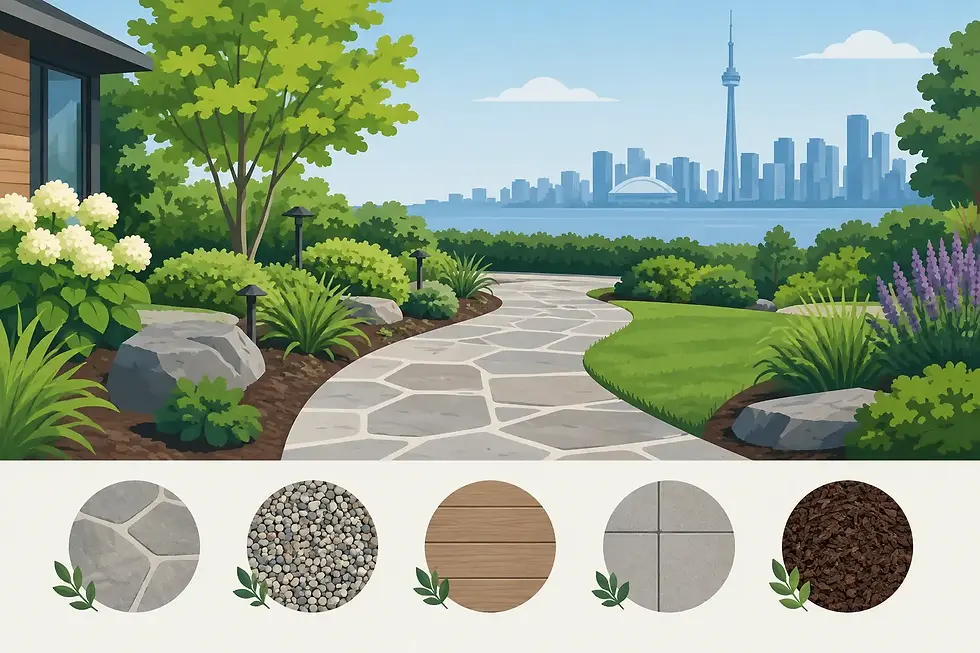
Interlocking stone offers flexibility for driveways, walkways, and patios, especially when installed on a properly prepared base. Concrete can create clean, contemporary surfaces and defined edges. Natural-looking planting, mulch, and stone accents can soften larger hardscape areas. Artificial turf may be a good fit for select spaces where natural grass struggles, although it still needs a well-prepared foundation and a design that manages heat, drainage, and surrounding planting.
There are trade-offs in every choice. A large patio creates generous space for entertaining but can increase the need for drainage management and cooling landscape elements. Dense hedges add privacy, but need regular pruning to stay healthy and contained. More gardens can bring seasonal colour and curb appeal, while a simpler planting plan may better suit a homeowner who wants less ongoing maintenance.
Design for Movement, Privacy, and Everyday Use
The most successful yards make circulation feel natural. Guests should be able to move from the driveway or gate to the front door without stepping through a garden bed. In the backyard, the route from the house to the patio, barbecue area, lawn, shed, or side gate should be clear and durable.
Small properties benefit from this kind of planning most. A narrow Toronto backyard can still feel generous when each area has a purpose and the layout avoids wasted corners. Built-in level changes, defined seating zones, planting borders, and strategic fencing can create a sense of separation without making the yard feel closed in.
Privacy is another common request, especially in closely spaced neighbourhoods. Fencing, layered planting, hedges, and screens can all help, but the best solution depends on sightlines, available space, and maintenance expectations. A mature hedge has a softer look than a solid fence, for example, but it needs time and seasonal care. Combining both can provide immediate screening while allowing the landscape to become more established over time.
Protect the Finished Landscape With Maintenance
Even durable construction benefits from regular attention. Interlock should be checked for shifting, joints should be maintained as needed, and drainage paths should stay clear of leaves and debris. Hedges and trees need appropriate pruning, not just trimming for shape. Garden beds respond well to seasonal clean-up, fresh mulch, and timely removal of weeds before they spread.
Maintenance is also an opportunity to spot small issues early. A low area in a lawn, a loose step, pooling water, or a failing edge can often be addressed before it affects a larger section of the property. The goal is not constant work. It is consistent care that protects the appearance and performance of the space.
For homeowners in Etobicoke, Toronto, North York, Mississauga, and nearby GTA communities, a professional assessment can bring clarity to projects that feel overwhelming. Maximum Landscaping Services approaches each property with customized recommendations, careful construction planning, clear communication, and a focus on finishes made to last.
A better yard begins when the design responds to the way you actually live outside. Start with the issues that limit your property now, then build toward the outdoor space you will be glad to use season after season.


Comments